
An environmentally sustainable maritime Singapore
Proactive marine management and environmental protection efforts.
Last updated on 25 August 2026
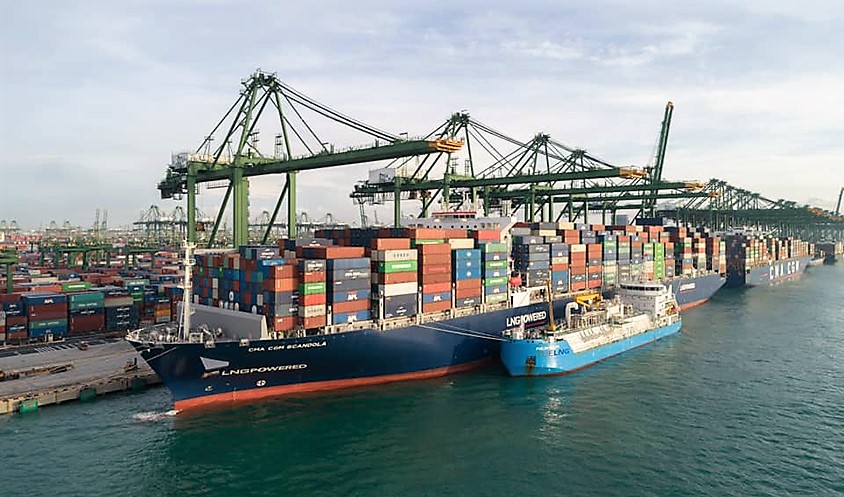
The imperative to grow our port, and develop our International Maritime Centre, must be accompanied by efforts to protect the marine environment and tackle climate change.
The 2023 International Maritime Organization (IMO) GHG Strategy commits Member States to peak greenhouse gas (GHG) emissions from international shipping as soon as possible and reach net-zero by or around 2050. As a responsible global hub port, Singapore plays an important role in catalysing the greening of international shipping, and we remain committed to providing zero and near-zero emission solutions to meet the future energy needs of the global shipping industry.
The Maritime and Port Authority of Singapore (MPA) is moving decisively to develop various net-zero fuel pathways in the Port of Singapore.
As a major bunkering hub, Singapore is building up methanol and ammonia value-chains to safely offer a range of fuel solutions for the international shipping industry. MPA is also working with the IMO Secretariat and IMO Member States to develop GHG reduction measures that will help the maritime sector meet the targets set out in the 2023 IMO Strategy on Reduction of GHG Emissions from Ships. MPA has also ratified all major IMO Conventions relating to the prevention of pollution from ships.
In addition, Singapore has established nine bilateral Green and Digital Shipping Corridors (GDSCs) which aim to support the decarbonisation of the maritime industry and improve efficiencies through digitalisation and mobilising demand from the private sector. These comprise six GDSCs with Port of Rotterdam, Port of Los Angeles and Port of Long Beach, Japan, Australia, India and Republic of Korea, and three with China – Tianjin, Shandong and a national-level GDSC.
To support the green energy transition, MPA launched a S$100 million Maritime Singapore Green Initiative (MSGI) in 2011. The initiative recognises and provides incentives to companies that adopt clean and green shipping practices and port operations. In line with the strengthened global commitment to reduce GHG emissions from ships, MPA refreshed the MSGI to encourage early adoption of zero and near-zero GHG emissions technologies and fuels in 2024. MPA has committed $50 million to support the refreshed MSGI.
Domestically, MPA targets for Singapore’s harbour craft sector to achieve net-zero emissions by 2050, and will require all new harbour craft operating in our port waters to be fully electric, be capable of using B100 biofuels, or be compatible with net-zero fuels from 2030. In addition, both port terminal operators, PSA Corporation Limited and Jurong Port Pte Ltd, aim to collectively achieve at least 60% reduction of total emissions from port operations by 2030 as compared to 2005 levels, and net-zero emissions by 2050. Tuas Port, when fully operational in the 2040s, will consolidate all container terminal activities in Singapore at a single location. By 2050, Tuas Port container handling operations will be powered by electricity, supplemented by low or zero-carbon energy sources. Solar panels will also be used to generate green electrons for the port terminals. To manage the impact of Tuas Port’s development on the environment, MPA has worked with volunteers from environmental interest groups to relocate coral colonies to St John’s and Sisters’ Islands.
Given the dynamic developments in the global maritime decarbonisation landscape, MPA constantly refines and reviews our strategies and initiatives to ensure alignment with our domestic targets and global standards and developments. Periodic updates will continue to be provided to the industry at relevant fora.