Sustainable land transport
Achieving a cleaner and greener land transport system.
Last updated on 25 August 2026
Policies
Sustainability is an important agenda for Singapore, and we will do our part in reducing emissions from the land transport system. Emissions attributed to the land transport sector peaked in 2016.
Since then, we have been and will continue to reduce the sector's emissions by encouraging the use of public transport and active mobility, and transitioning to a cleaner-energy vehicle population. We are committed to significantly reduce land transport emissions to support Singapore's 2050 net zero emissions target.
Greening public transport
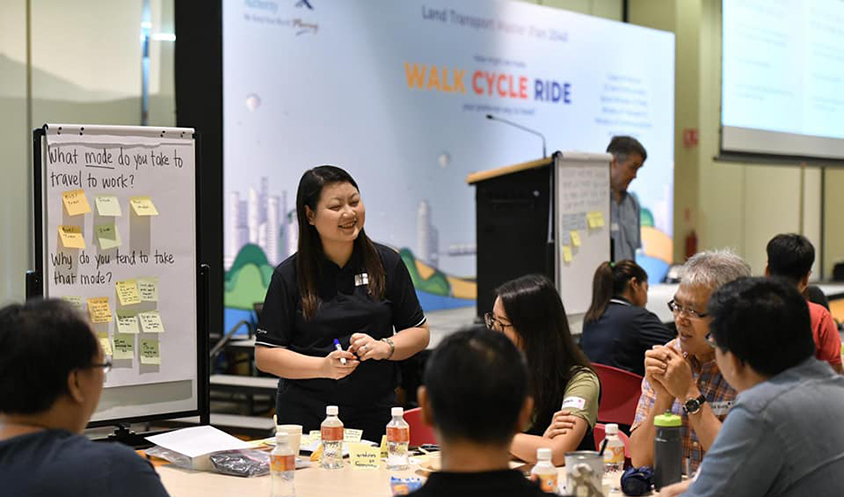
Encouraging the use of greener modes of transport will achieve the most significant reduction in carbon emissions from the land transport sector. Under our Land Transport Master Plan 2040, we hope to raise the mass public transport modal share during peak hour to 75 per cent by 2030, and for Walk-Cycle-Ride modes to make up 90 per cent of peak period journeys by 2040.
To further reduce emissions, we are taking steps to green our public transport operations. Our rail lines and stations are built with environmental sustainability in mind. For example, the Circle Line and Downtown Line were awarded the Building and Construction Authority (BCA) Green Mark Gold and Gold Plus certifications respectively under the Green Mark for Rapid Transit System framework, in recognition of their environmentally-friendly features. Following BCA’s introduction of the new Green Mark scheme for Transit Stations developed in consultation with the Land Transport Authority in 2019, Canberra station became the first to receive the Green Mark Platinum certification under this scheme. Upper Thomson, Xilin and Sungei Bedok stations on the Thomson-East Coast Line, as well as Punggol Coast station on the North East Line, have since received the same tier of certification. All remaining Thomson-East Coast Line stations are targeting the Green Mark Gold certification.
Looking ahead, the upcoming RTS Link CIQ building is designed to meet BCA Green Mark Platinum certification, featuring energy-saving equipment such as LED lighting, solar panels, and a hybrid cooling system. The Jurong Region Line stations are targeting the Green Mark GoldPlus certification, while all Cross Island Line stations are targeting Green Mark Platinum certification.
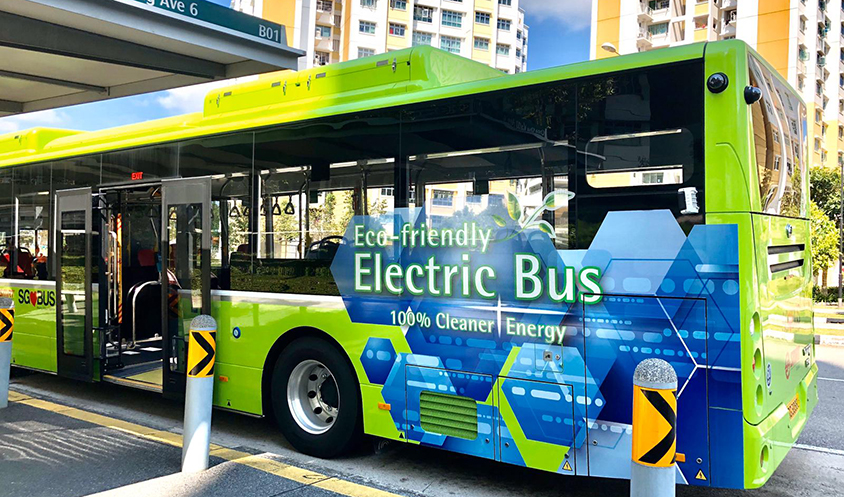
Since 2020, all new public bus purchases are cleaner-energy buses. By 2030, we expect electric buses to comprise half of our public bus fleet, and we aim to gradually replace all existing diesel buses with cleaner energy buses by 2040, so that the public can enjoy quieter commutes and cleaner air.
Greening the private vehicle population
Besides regulations to limit the ownership and usage of private vehicles to ease the pressure on road space, measures are also in place to prompt the shift to cleaner fuels.
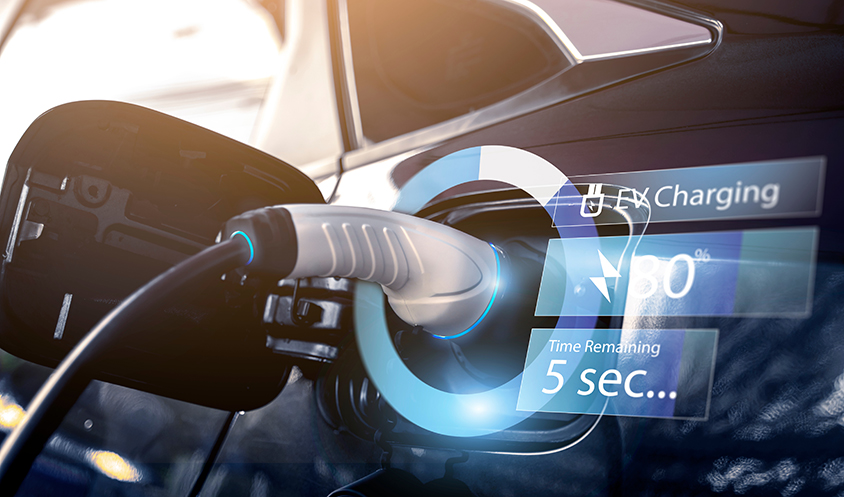
Our vision is for all vehicles to run on cleaner energy by 2040. New registrations of diesel cars and taxis have been banned from 2025, while all new registrations of cars and taxis will be of cleaner energy models from 2030.
Electrification of vehicles will be a key measure to green our land transport sector, alongside the decarbonisation of the power grid. To support electric vehicle (EV) adoption, we have introduced a suite of measures, including tax incentives, regulations and standards, and charger deployment.
Supporting active mobility
We are working towards building a liveable and sustainable city where walking and cycling become more common commuting choices. To encourage that, we are building around 1,300km of cycling paths islandwide by 2030 under Islandwide Cycling Network (ICN) Programme (opens in new tab). We will also repurpose suitable stretches of road (opens in new tab) into wider footpaths, cycling paths, or bus lanes, to better support cycling and walking.