Train
Expanding and renewing the rail network for improved accessibility and smoother rides.
Last updated on 25 August 2026
Policies
MRT network coverage
Expanding the rail network
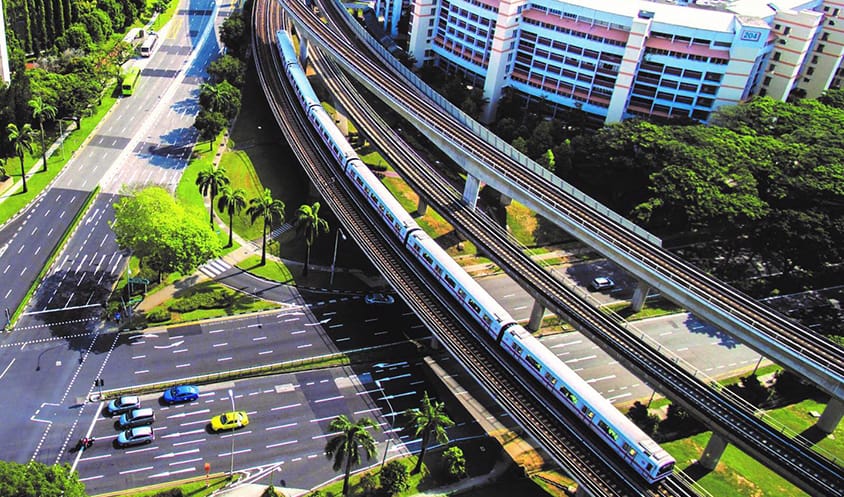
The rail network will grow to about 360km by the early 2030s to reach more people and places. The denser network will also provide more convenient options and alternative travel routes for commuters who use public transport.
Since the start of train operations on 7 November 1987 with just five MRT stations on the North-South Line, we have expanded the coverage of our rail network, building more lines and stations over the years.
Today, we are continuing to expand our rail network to serve more commuters and improve the resilience of our rail network. Beyond Circle Line Stage 6, which will “close the loop” on 12 July 2026, several major projects will be completed progressively, including Stage 5 of the Thomson-East Coast Line, the Downtown Line 2 and 3 extensions, as well as the Jurong Region Line (JRL) and Cross Island Line (CRL).
By the 2030s, about eight in ten households will be within a ten-minute walk of a train station.
Looking ahead, we also plan to implement the West Coast Extension of the JRL by the late 2030s, extending the line from Pandan Reservoir station to connect with the CRL at West Coast station. We are also studying a further extension to connect with the Circle Line at Kent Ridge Station by the early 2040s.
Additionally, feasibility studies are ongoing for two new rail lines; namely, the Seletar Line and the Tengah Line. The Seletar Line, if deemed feasible, could serve areas such as Woodlands, Sembawang, Sengkang West, Serangoon North, Whampoa, Kallang, and the Greater Southern Waterfront. For the Tengah Line, we are assessing how it could supplement the transport network in the west and northwest regions to serve areas such as Tengah, Bukit Batok, Queensway, and Bukit Merah. We have also preliminarily assessed that these two potential rail lines could meet at the Greater Southern Waterfront. If studies confirm that these lines are feasible, we expect to complete them in phases from the 2040s.
Learn more about the rail network (opens in new tab) and upcoming rail projects (opens in new tab).
Mid-life upgrade of the North East Line trains
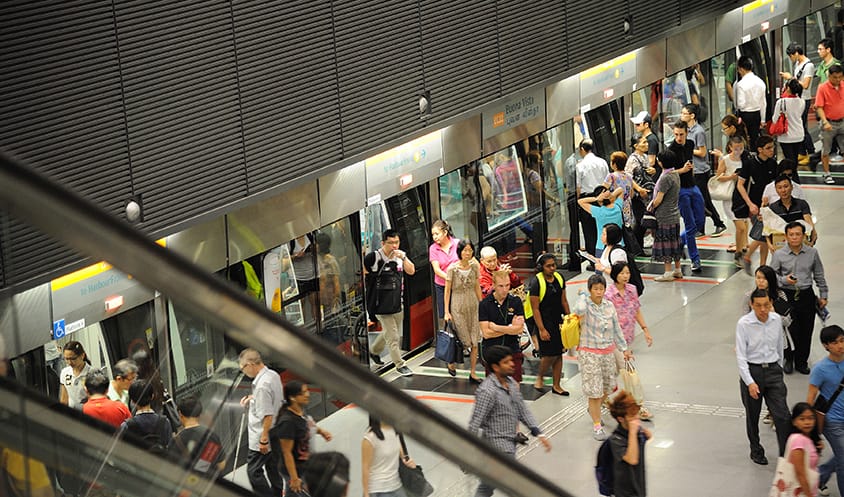
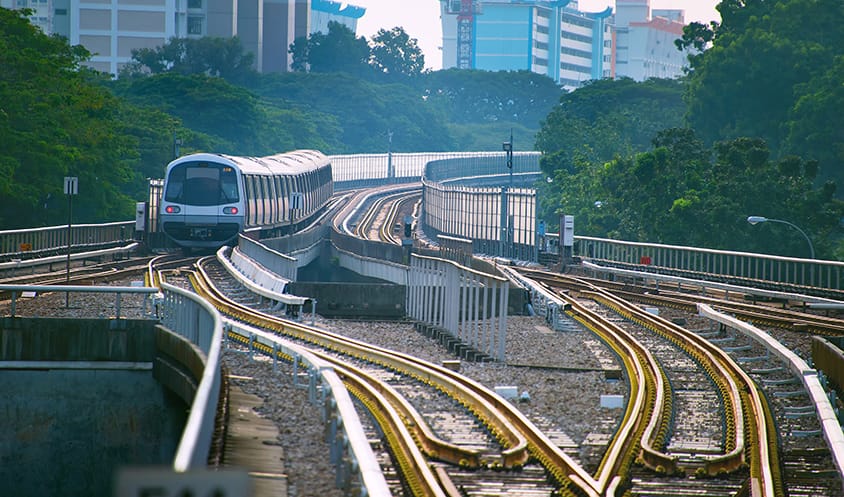
The North East Line (NEL) runs some of our oldest driverless MRT trains. The Land Transport Authority (LTA) has completed the mid-life upgrade of all 25 first-generation trains, with the final upgraded train returned to passenger service in March 2026. The upgraded trains come with refreshed interiors, as well as condition monitoring systems that monitor key train systems in real time, enabling data-driven maintenance decisions.
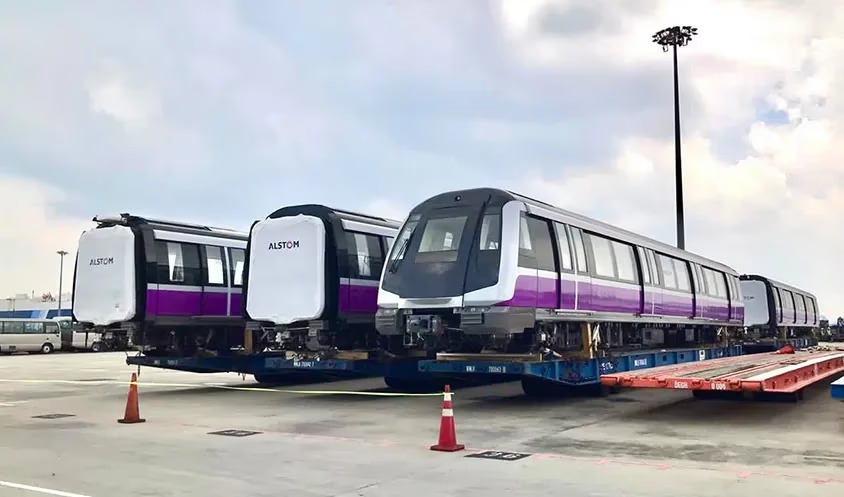
Additional trains to support Circle Line operations
23 new trains have been purchased for the Circle Line to cater for the expected increase in passenger volume when CCL6 commences operation. The first batch of new CCL trains reached Singapore in March 2022 and have been progressively put into service from April 2026.
Renewing the Bukit Panjang LRT and Sengkang-Punggol LRT
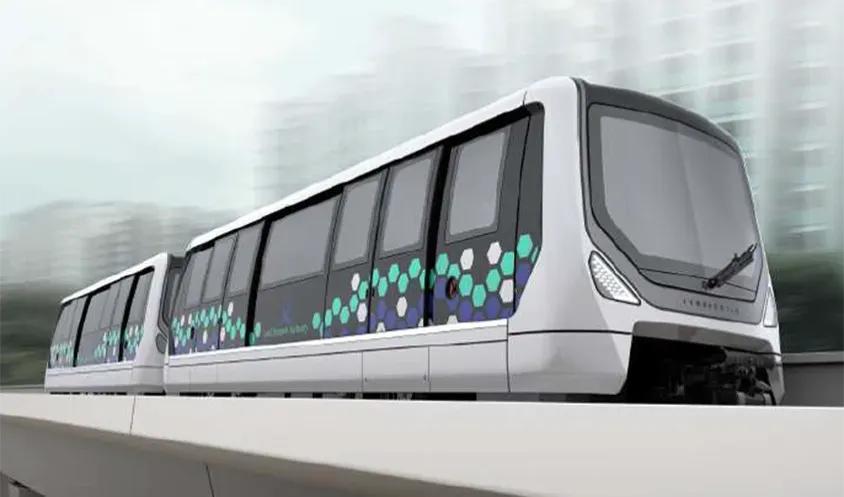
All 19 first-generation trains on the Bukit Panjang LRT (BPLRT) have been replaced with new trains. The BPLRT signalling system has also been upgraded to a new communications-based train control signalling system, similar to that used on MRT lines. Upgrades to the Operations Control Centre have also been completed. Power rail replacement works are in progress, and we are on track to complete BPLRT renewal works by 2026.
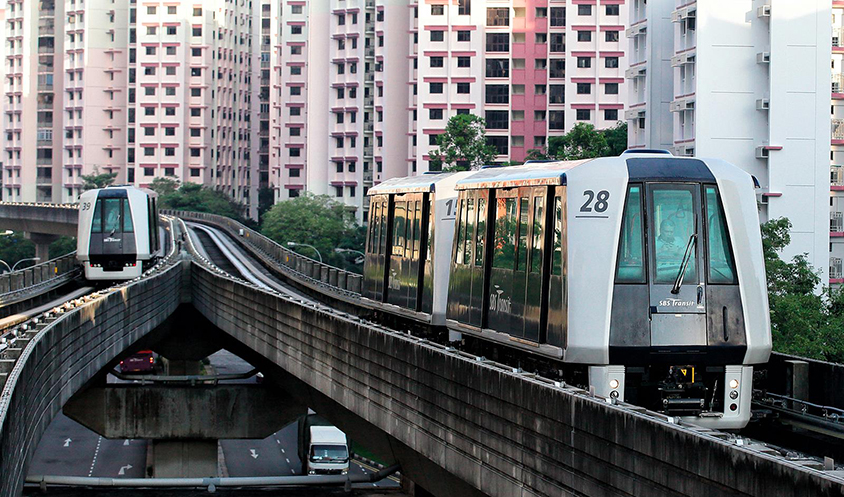
Another 25 new Sengkang-Punggol LRT (SPLRT) two-car trains have been purchased to better meet long-term public transport demand in Sengkang and Punggol towns. Since July 2025, seven new trains have entered service, with the remaining trains set to progressively replace the first-generation SPLRT fleet by 2028.
The SPLRT depot is being expanded from 3.5 hectares to 11.1 hectares, to increase its stabling capacity and create more space for maintenance facilities. The depot expansion works are expected to be completed by 2027.
Learn more about the various renewal works in our rail network (opens in new tab).
Strengthening the MRT network
Rail reliability
Rail reliability will continue to be a top priority. Since 2019, we have achieved and maintained our target of at least 1 million Mean Kilometres Between Failure (MKBF) across our MRT network, making us one of the leading metro systems worldwide for reliability.
The Rail Reliability Taskforce, comprising LTA and rail operators SMRT and SBS Transit, was formed on 19 September 2025 to develop and implement immediate solutions to improve rail reliability and joint responses to train service disruptions. Following a comprehensive review of rail operations and maintenance practices, the Taskforce submitted its recommendations for enhancing rail system reliability to the Acting Minister for Transport on 30 December 2025. MOT reviewed and accepted the recommendations from the Taskforce in February 2026, and will work closely with LTA, the rail operators, and relevant stakeholders on the implementation of the Taskforce’s recommendations, which will be rolled out progressively over the next few years across the rail network.
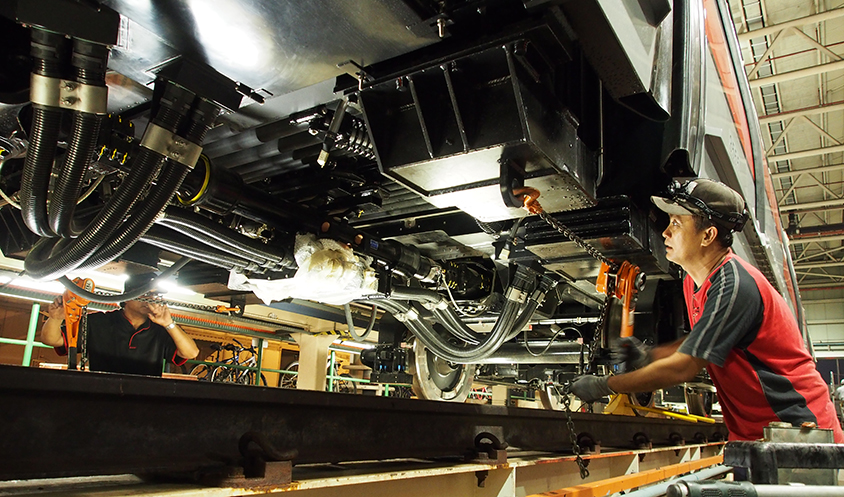
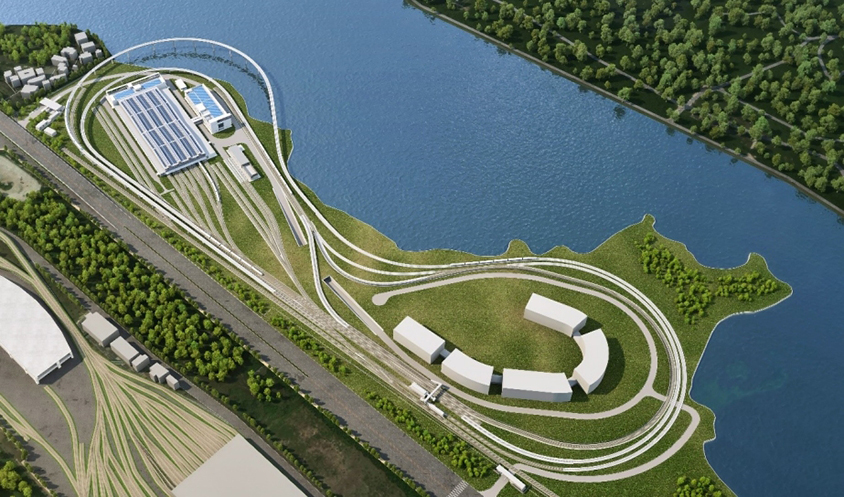
Singapore Rail Testing Centre (SRTC)
This centre supports the testing and commissioning of trains and railway systems for both new and existing rail lines. SRTC is the first of its kind in Southeast Asia, and allows us to conduct round-the-clock testing without affecting operations of active train lines.
This frees up time for maintenance work on the mainline during limited engineering hours, and minimises the need for interruptions to train services during operational hours. The centre’s test tracks are designed to be interoperable and can accommodate the various types of trains and railway systems used across the rail network.
Learn more about the SRTC (opens in new tab).
New Rail Financing Framework (NRFF)
Under the NRFF framework, which was first implemented in 2011, LTA took over the ownership of operating assets, such as trains and signalling systems, from the public transport operators. As the asset owner, LTA can ensure timely investments in capacity expansion and the replacement and upgrading of operating assets.
The rail operators, relieved of the responsibilities of asset ownership, focus on operations and maintenance of the rail network and providing reliable rail services for commuters. Adjustments were also made to the licensing periods, profit and risk sharing arrangements, as well as the regulatory regime, to enhance the contestability, sustainability and reliability of our rail system.
Learn more about the NRFF (opens in new tab).